
Reformer, Cadillac, Chair or Ladder Barrel? A Beginner's Guide to Pilates Equipment
The short answer: the reformer is the best all-round machine for beginners because its adjustable springs can make any exercise easier or harder. The Cadillac offers the most support and suits people who want very guided movement. The chair is compact but challenging, and the ladder barrel is used for stretching and spinal mobility. Most beginners start on the mat or reformer, then add the other apparatus as their control improves.
The first time you walk into an equipment Pilates studio, it can look more like a workshop than a gym: wooden frames, straps, springs and bars. Each piece was designed by Joseph Pilates for a reason. Knowing what they do makes it much easier to choose the right class.
Why Pilates uses equipment at all
Springs are the key. Unlike weights, a spring can either resist you or assist you. On a machine, the same exercise can be made gentler for someone who is new or recovering, or more demanding for someone who is strong. That flexibility is why equipment Pilates suits such a wide range of people, and why classes are kept small: each person needs their own machine, and the teacher needs to see everyone's alignment.
The reformer
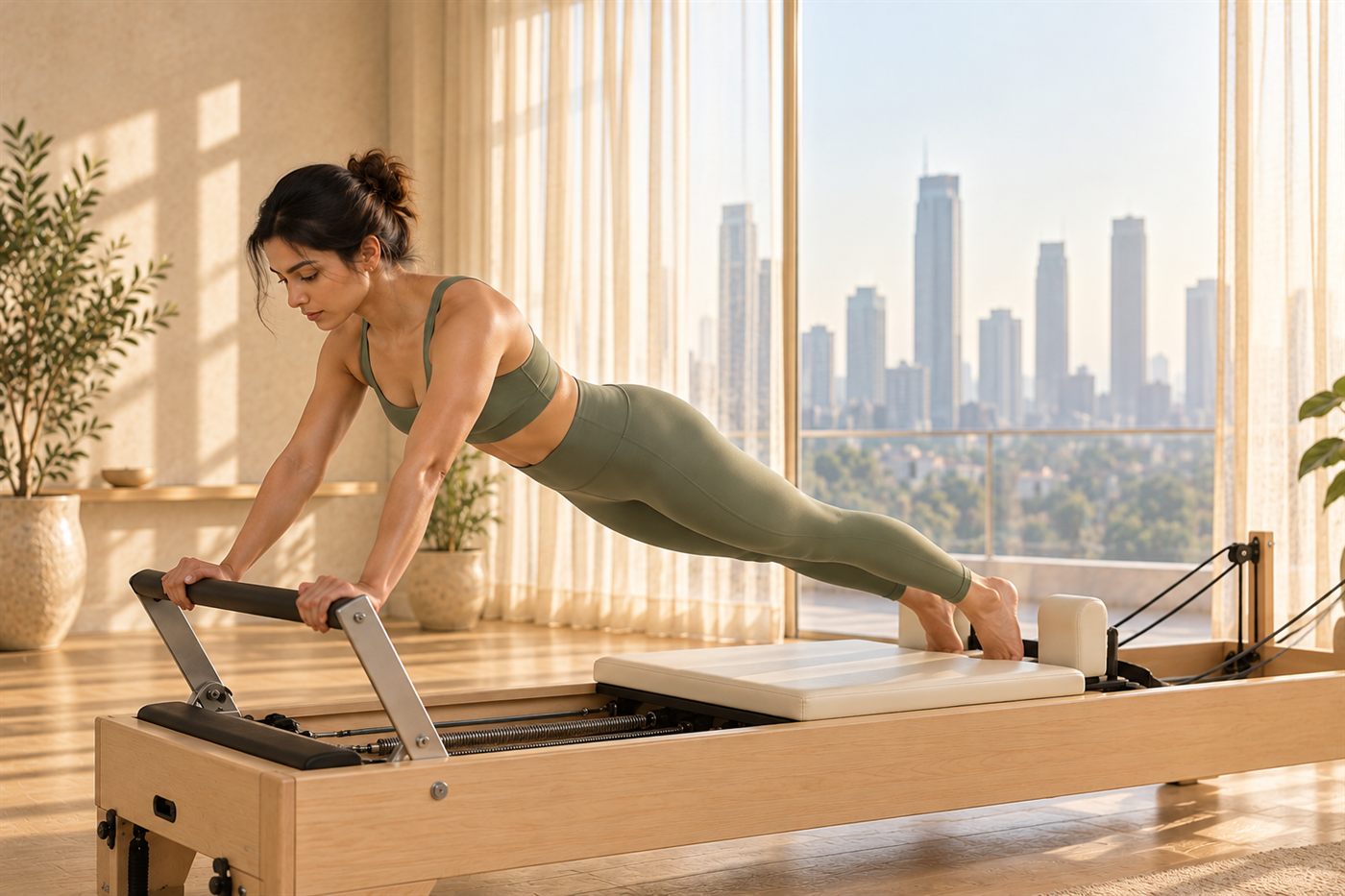
What it is: a sliding carriage on a frame, connected to a set of springs, with a footbar at one end and straps at the other.
How it feels: you push and pull the carriage against the springs while lying, kneeling, sitting or standing. Controlled resistance, precise movement and steady progression are the hallmarks.
Good for: whole-body strength, core control and posture. Because every exercise can be modified, it works for complete beginners and experienced students in the same room.
Beginner tip: lighter springs are not always easier. Less resistance can mean less support, so you have to control the carriage more. Trust the teacher's spring settings in your first sessions.
The Cadillac
What it is: a raised table with a tall frame above it, fitted with bars, springs and straps. It is also called the trapeze table.
How it feels: secure and guided. The frame and springs support the body through movement patterns, so you can concentrate on alignment rather than balance.
Good for: people who want very supported work, and experienced students looking for depth — the same apparatus can be accessible for beginners and challenging for advanced practitioners.
The chair (Wunda chair)
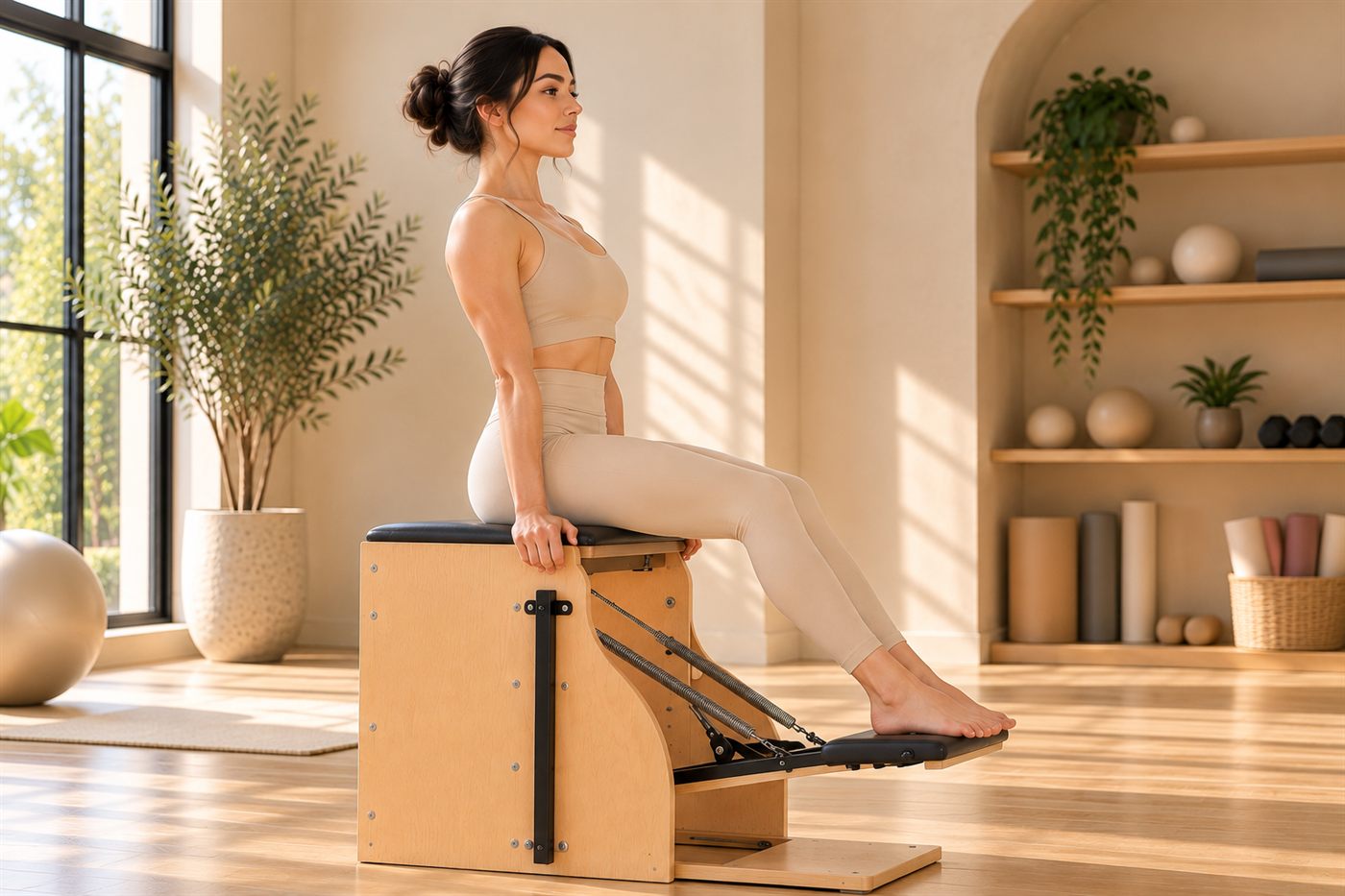
What it is: a compact box with a spring-loaded pedal.
How it feels: deceptively hard. With a small base of support, you work against the pedal while seated, standing or kneeling, which challenges balance, core control and leg strength.
Good for: building strength and stability once you know the basics. It is less common as a first machine, but an excellent addition after a few weeks of reformer or mat work.
The ladder barrel
What it is: a curved barrel joined to a short ladder.
How it feels: the curve supports your spine while you stretch over or along it, and the ladder gives you something to hold or push against.
Good for: opening the front of the body, spinal mobility and controlled strengthening — useful if long hours at a desk have left you rounded and tight through the chest and hips.
And the mat?
Mat Pilates uses nothing but your body weight, breathing and purposeful movement. Without springs to help, the deep muscles around the spine, hips and core do all the stabilising, which makes it an honest way to learn the principles. Many teachers recommend a few mat or private sessions before group equipment classes.
Which machine should a beginner start on?
| If you… | Start with |
|---|---|
| Have never done Pilates | Mat Pilates or an introductory reformer session |
| Want guided, very supported movement | Cadillac |
| Already know the basics and want more challenge | Chair |
| Feel stiff through the back and chest | Ladder barrel, alongside reformer work |
| Are recovering from an injury | A private session, after clearance from your doctor or physiotherapist |
A realistic progression for your first two months
- Weeks 1–2: learn the principles — breathing, neutral spine, engaging the deep abdominals — on the mat or in a private reformer session.
- Weeks 3–4: join small group reformer classes two or three times a week.
- Weeks 5–8: add a Cadillac, chair or ladder barrel class to work the body from different angles.
Two sessions a week is a sensible minimum: the NHS recommends strengthening activities on at least two days a week and lists Pilates among them.
What to ask before your first equipment class
- How many people are in a group class? Smaller groups mean more correction.
- Is there an introductory or beginner session?
- What training do the teachers have? It is reasonable to ask about any instructor's qualifications and experience.
- Do I need grip socks?
- What is the cancellation policy?
Equipment Pilates at Dhyana Dubai
Dhyana in Business Bay teaches Pilates on all four pieces of apparatus — reformer, Cadillac, chair and ladder barrel — as well as mat Pilates. Group Pilates classes have a maximum of four people. A single group Pilates class is AED 145, a 10-class pack is AED 1,350 (valid 60 days), and private Pilates starts at AED 400 per session, all including VAT.
If this is your first time, read what to expect at your first reformer class, then get in touch and we will suggest where to start.
Frequently asked questions
Is reformer Pilates suitable for complete beginners?
Yes, provided the class is small and the teacher adjusts the springs for you. Many people take a mat or private session first to learn the basic principles.
What is the difference between reformer and Cadillac Pilates?
The reformer has a sliding carriage you move against springs; the Cadillac is a fixed table with a frame of bars and springs above it. The Cadillac generally offers more support, while the reformer adds the challenge of controlling a moving carriage.
What should I wear to an equipment Pilates class?
Fitted, comfortable clothing so the teacher can see your alignment, and grip socks if the studio asks for them. Avoid zips and buckles that could catch on equipment.
How many times a week should I do Pilates?
Two to three sessions a week is a common and sustainable rhythm for beginners.
References
This article is general information, not medical advice. If you are injured, pregnant or managing a health condition, speak to a healthcare professional before starting Pilates.