Yoga vs Pilates: The Real Differences and How to Choose
The short answer: Pilates is a focused method for core strength, control and posture, often taught on spring-loaded equipment. Yoga is a broader practice that combines postures with breathwork, relaxation and meditation, and ranges from very gentle to very dynamic. If your main goal is core strength and precise control, start with Pilates; if you want flexibility, stress relief and a mind-body practice, start with yoga. Many people end up doing both.
Yoga and Pilates are often mentioned in the same breath, and from the outside they can look similar: mats, slow movement, attention to breathing. In the room, they feel quite different. Here is how they compare, without the marketing.
Where yoga and Pilates come from
Yoga developed in India thousands of years ago as a complete system for wellbeing — physical, mental and spiritual. Most classes today focus on postures (asanas), breathing techniques (pranayama) and meditation, but the tradition is much wider than exercise.
Pilates is far younger. It was developed by Joseph Pilates in the early twentieth century, who called his method "Contrology". He designed both a mat sequence and a set of apparatus — including the reformer and the Cadillac — to train the body with control and precision.
Yoga vs Pilates at a glance
| Yoga | Pilates | |
|---|---|---|
| Main focus | Flexibility, strength, balance, breath and mental calm | Core strength, control, alignment and posture |
| Breath | Breathwork is a practice of its own (pranayama) | Breath supports and paces each movement |
| Pace | From slow holds (Yin, Iyengar) to flowing sequences (Vinyasa, Ashtanga) | Controlled, with fewer, more precise repetitions |
| Equipment | Mat, plus blocks, straps and bolsters | Mat, or apparatus such as the reformer, Cadillac, chair and ladder barrel |
| Mind-body element | Often includes meditation and relaxation | Concentration on movement quality rather than meditation |
| Typical class size | Varies widely by studio | Equipment classes are usually small, as each person needs a machine |
What the benefits have in common
Both count as muscle-strengthening activity. The NHS lists yoga and Pilates among its examples and recommends adults do strengthening activities on at least two days a week. The World Health Organization notes that regular physical activity improves wellbeing and reduces symptoms of depression and anxiety.
For yoga specifically, the US National Center for Complementary and Integrative Health summarises research suggesting benefits for perceived stress, balance and sleep, and a modest benefit for low-back pain — similar to other forms of exercise. Evidence varies between studies and styles, so treat these as reasonable expectations rather than promises.
How they differ in practice
A yoga class
Expect a warm-up, a series of standing and seated postures, some breathwork and a period of relaxation at the end. The experience depends heavily on the style: a Hatha or Iyengar class is steady and instructional, while Ashtanga builds heat with a set sequence. Kundalini focuses on breath, mantra and meditation.
A Pilates class
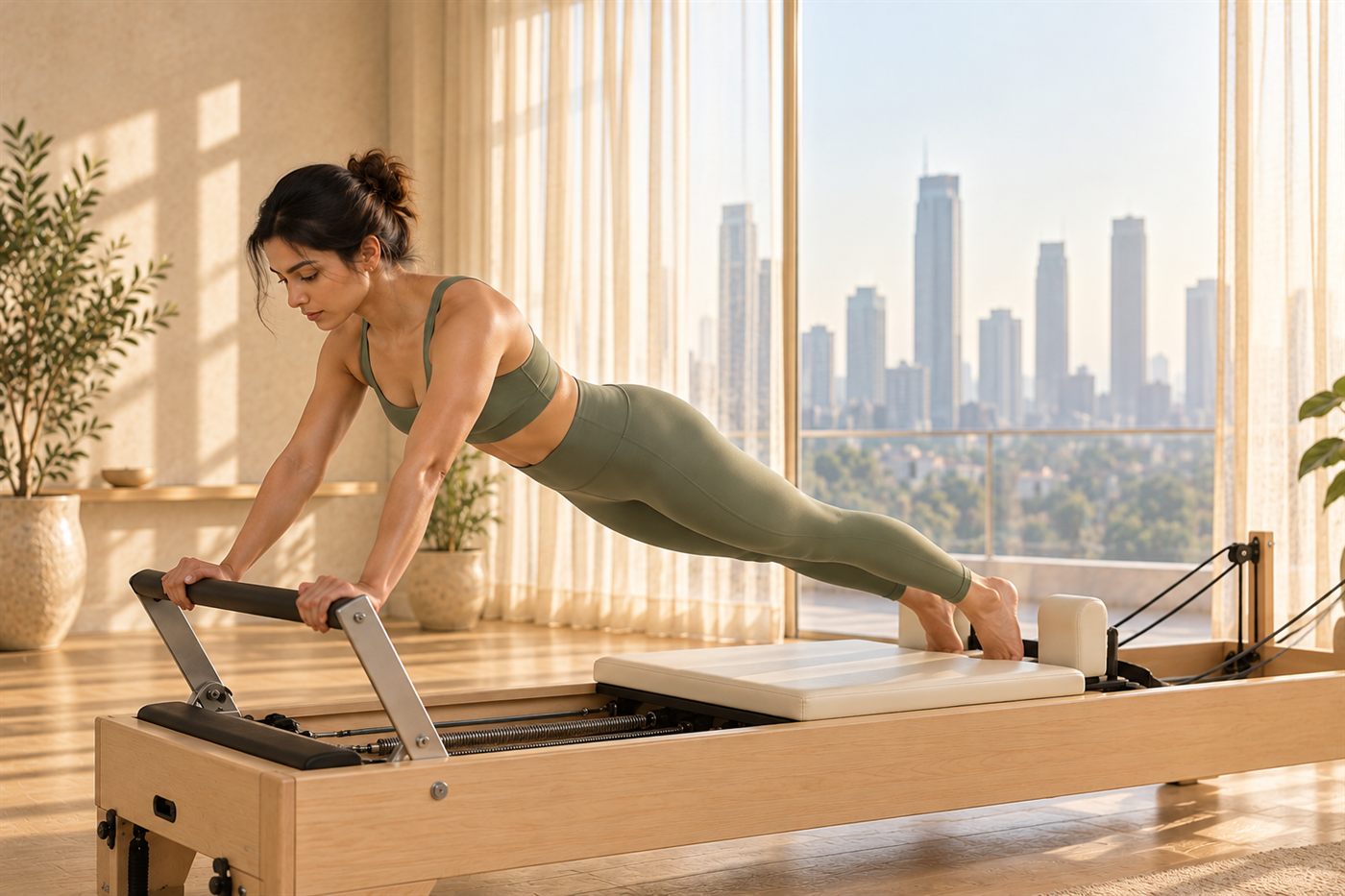
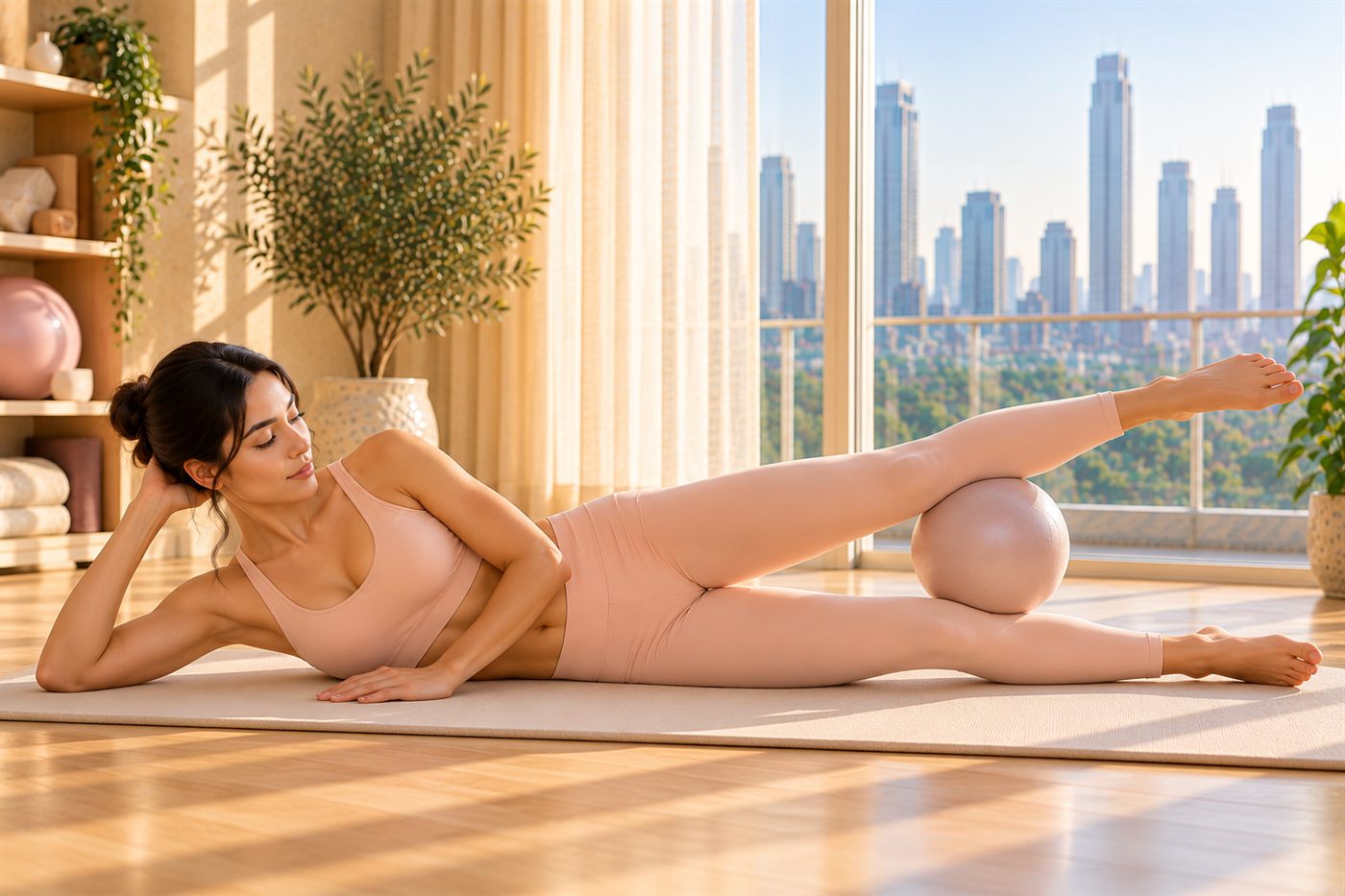
Expect precise exercises that work the deep muscles around the spine, hips and core. On the mat you use your own body weight. On the reformer, adjustable springs either assist or resist each movement, so the same exercise can be made gentler or harder. Teachers watch alignment closely, which is why equipment classes are usually small.
Which should you choose?
Start from your goal rather than the trend:
- "I want a stronger core and better posture." Pilates, especially on the reformer, gives very targeted work.
- "I want to feel less stressed." Yoga's breathwork and relaxation make it a natural fit. Kundalini, Yin and Hatha are good places to look.
- "I'm stiff and want more flexibility." Yoga, particularly Hatha, Iyengar or Yin, with props to support you.
- "I'm recovering from an injury." Speak to your doctor or physiotherapist first. Many people then find a private session — yoga or Pilates — the safest way back, because the teacher can adapt everything.
- "I get bored easily." Alternate: Pilates for strength on one day, yoga for mobility and calm on another.
Can you do both?
Yes, and they complement each other well. Pilates builds the core control that helps you hold yoga postures with better alignment; yoga adds mobility and a way to switch off that Pilates does not set out to provide. A simple weekly pattern is one Pilates class and one or two yoga classes.
Trying yoga and Pilates at Dhyana Dubai
Dhyana, in Business Bay, teaches both under one roof. Pilates is offered on the reformer, Cadillac, chair and ladder barrel as well as on the mat, and group Pilates classes have a maximum of four people. Yoga styles include Hatha, Hatha Vinyasa, Ashtanga, Iyengar, Kundalini and Yin with sound healing.
See all styles and prices on the classes page, read our comparison of reformer and mat Pilates, or ask us which to try first.
Frequently asked questions
Is Pilates harder than yoga?
Neither is harder by default. A dynamic Ashtanga class can be more demanding than a beginner mat Pilates class, and a reformer class with heavy springs can be tougher than gentle Hatha. Difficulty depends on the class, not the discipline.
Which is better for weight loss?
Neither is designed mainly for weight loss. Both build strength and can support an active lifestyle alongside diet and other activity, but they are not a substitute for overall changes in activity and nutrition.
Is yoga or Pilates better for back pain?
Research on yoga suggests a modest benefit for low-back pain, similar to other exercise. Back pain has many causes, so get it assessed by a healthcare professional and ask them which approach suits you.
Do I need equipment for Pilates?
No. Mat Pilates uses only your body weight. Equipment-based Pilates, such as the reformer, is taught in a studio.
References
- NHS, Physical activity guidelines for adults aged 19 to 64.
- World Health Organization, Physical activity fact sheet.
- National Center for Complementary and Integrative Health (NCCIH), Yoga: Effectiveness and Safety.
This article is general information, not medical advice. Speak to a healthcare professional before starting a new exercise programme if you have a health condition or injury.